Blog

Businesses urged to uphold human rights

Businesses urged to uphold human rights

By Khumbo Msambala Salanje

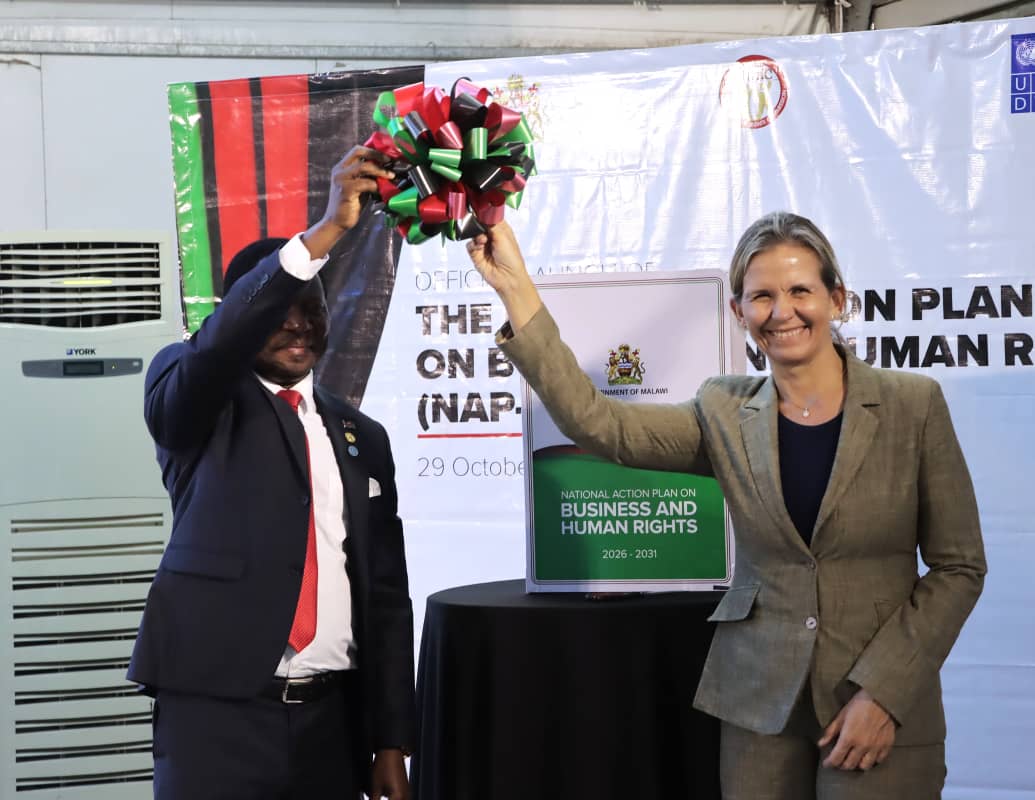
Lilongwe, October 29, Mana: Government has urged businesses to uphold human rights, saying Malawi’s National Action Plan on Business and Human Rights (NAP-BHR) will help promote responsible business practices and strengthen the country’s competitiveness in international markets.

Minister of Justice and Constitutional Affairs Charles Mhango made the remarks during the launch of the NAP-BHR at Sunbird Capital Hotel in Lilongwe on Thursday.

He said the plan marked an important step towards aligning Malawi’s business environment with international standards, stressing that responsible business conduct was increasingly essential for participation in global markets.

“Today is a very important day for Malawi in terms of doing business and respecting the international standards for doing business and respecting human rights in this country,” Mhango said.

He said the five-year plan would address gaps in national guidance on business conduct and support Malawi’s participation in the African Continental Free Trade Area by helping businesses comply with relevant trade requirements.

Central Region Councillor for the Malawi Confederation of Chambers of Commerce and Industry (MCCCI), Dr Peter Matipwiri, said foreign exchange shortages, rising operating costs and limited access to finance should not justify neglecting human dignity.


“Trust is not an expense, it is an asset. And dignity is not an obstacle to productivity. It is one of its foundations,” he said.

Matipwiri said small and medium-sized enterprises needed practical guidance and training to integrate human rights into recruitment, workers’ pay and safety, supplier selection and community engagement.

He said responsible business practices should extend beyond large corporations to small enterprises, farmers and contractors across the country.

Malawi Human Rights Commission (MHRC) Chief Executive Officer Habiba Osman said the Commission would continue investigating business-related human rights violations, helping resolve disputes and monitoring implementation.

Osman said the plan was founded on three pillars: the state’s duty to protect human rights, businesses’ responsibility to respect them and access to effective remedies when violations occur.

United Nations Development Programme (UNDP) Resident Representative Fenella Frost said adherence to responsible business standards could make Malawian enterprises more attractive to foreign investors and export markets.

Frost said implementation would be led by the government in partnership with the private sector, including the Malawi Chamber of Commerce, while the Ministry of Justice would oversee the process with support from the MHRC and UNDP.

Mana/kms/mcm

Child marriage law alone not enough without enforcement, activist warns

Child marriage law alone not enough without enforcement, activist warns

By Frank Humphreys

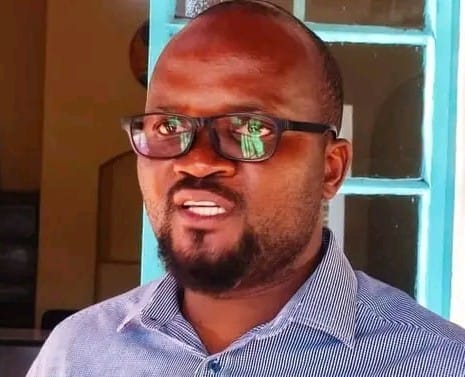
Human rights activist, Edward Kambanje, has warned that a child marriage law alone will not end the practice unless government strengthens enforcement of existing child protection laws and adequately funds the fight.

Kambanje was reacting to ongoing efforts by the Special Law Commission on the Development of Legislation for the Eradication of Child Marriage to develop dedicated legislation.

The Commission recently consulted stakeholders on the proposed law at a national conference in Lilongwe.

"The biggest challenge is not necessarily the absence of laws, but the gap between legal provisions and their effective enforcement," he said.

Kambanje added that although Malawi has made progress through the 2017 constitutional amendment and other child protection laws, child marriage persists because of weak enforcement, limited public awareness, poverty, gender inequality and social practices that normalise marriage involving children.

Kambanje acknowledged that a standalone law could help, but only if it is backed by implementation.

"It must be supported by effective implementation, adequate resources and accountability for those responsible for protecting children," he said.

According to the rights activist, lack of a dedicated budget line can be a major obstacle.

"Laws and policies cannot deliver results without sufficient funding: the allocation must be adequate, released on time and properly monitored,” he said, and further urged government to treat ending child marriage as a national development priority, not merely a campaign or the responsibility of NGOs.

Speaking at the Commission's national consultative conference, chairperson Lyson Kandu said the proposed law would address gaps in existing legislation and give law enforcement officers and prosecutors clear provisions for handling child marriage cases.

"The commission observed that there are gaps in the already established legal framework: We have laws that address related offences, but that specific law for child marriage was not in place, and this created problems for law enforcers," he said

Meanwhile, the Ministry of Gender, Children, Disability and Social Welfare says it is working to reduce child marriages by 20 percent by 2030, on the background that about 37 percent of Malawian girls are married before the age of 18.

Director of Child Affairs in the ministry, Justin Hamela, said the target is part of a strategic plan government developed two years ago, and he acknowledged that some legal gaps remain as some councils have very limited resources for awareness programmes, and for removing children from marriages.

"That is why we are very confident that if we continue with the initiative, we should be able to reduce child marriage by 2030,” he said.

At the same media dialogue, organised by Girls Not Brides Malawi, Carol Kulemeka, technical lead for the Malawi Accelerator Programme at Girls Not Brides Malawi, observed that the national budget has no specific allocation for ending child marriage.

"There is no investment in ending child marriage, and we must correct that,” she said.

Globally, about 12 million children are married off every year, according to reports.

Mana

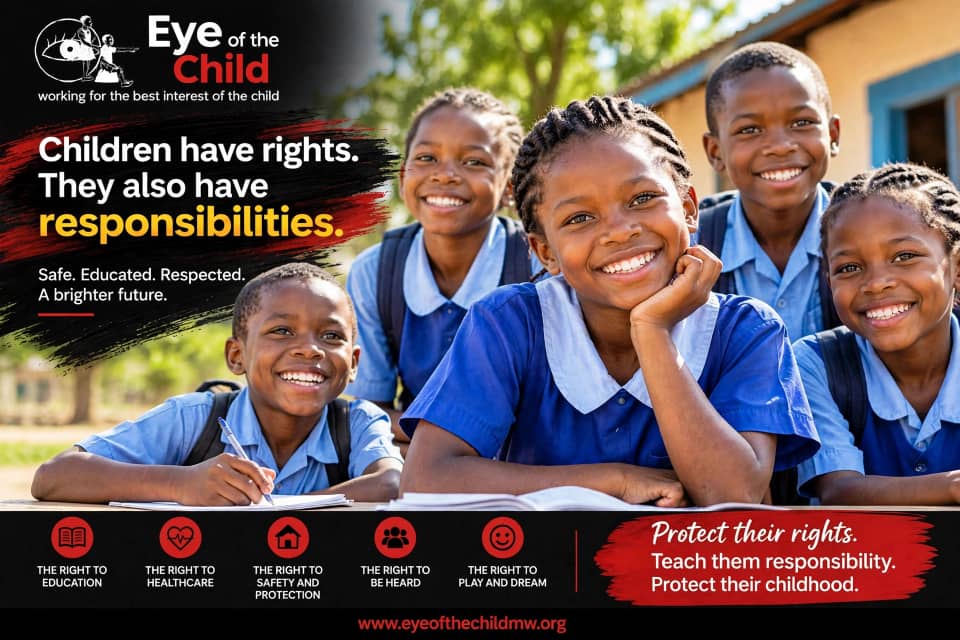
CHILDREN HAVE RIGHTS TOO: PROTECTING EVERY CHILD AND TEACHING RESPONSIBILITY

CHILDREN HAVE RIGHTS TOO: PROTECTING EVERY CHILD AND TEACHING RESPONSIBILITY

By Asiyatu James
 
Every child deserves to grow up in a world where they feel safe, loved, respected, and protected. Every child deserves a chance to learn, play, dream, and build a better future. But behind the smiles of many children are painful stories of abuse, neglect, child labour, trafficking, and exploitation.
 
Children are not only the future of our communities; they are part of our present. Protecting their rights is not just the responsibility of parents or organisations. It is a duty we all share.
 
Every Child Has Rights
 
Every child has the right to education, healthcare, food, shelter, protection, and love. Children also have the right to express their views, play, and be treated with dignity and respect.
 
No child should be forced into sexual exploitation, dangerous work, early marriage, or any situation that puts their safety at risk. Poverty, disability, or family background should never be used as a reason to mistreat a child.
 
Children also have the right to be heard. When a child speaks about fear, abuse, or anything that makes them feel unsafe, adults must listen and take their concerns seriously. Sometimes, a child who is quiet or withdrawn may be suffering in silence. A caring adult can make a life-changing difference by listening and offering support.
 
These rights are recognised under the United Nations Convention on the Rights of the Child. However, protecting children requires more than laws and promises. It requires action from families, communities, organisations, and government institutions.
 
Rights Come With Responsibilities
 
While children have rights, they also need to learn how to become responsible members of society.
 
Children should learn to respect their parents, guardians, teachers, and other people. They should try their best in school, speak truthfully, care for their belongings, and treat others with kindness.
 
They also have a responsibility to respect the rights of other children. Bullying, discrimination, fighting, and humiliating others are harmful behaviours that should not be encouraged. Every child deserves to feel accepted, regardless of their background or abilities.
 
At home, children can help with simple tasks suitable for their age. At school and in their communities, they can practise honesty, kindness, cooperation, and respect.
 
However, teaching responsibility does not mean using violence, insults, or harsh punishment. Children need guidance, patience, and good examples from adults.
 
A child's rights are not a reward for good behaviour. Every child deserves protection, education, and respect, even when they make mistakes.
 
Everyone Has a Role to Play
 
Parents and guardians must create homes where children feel safe enough to speak about their problems without fear. Teachers must ensure that schools are safe places for learning. Community leaders must speak against harmful practices and help protect vulnerable children.
 
Government institutions, law enforcement agencies, and child protection organisations must work together to prevent abuse and ensure that children receive help when their rights are violated.
 
Children also need protection online. False job offers, online grooming, blackmail, and promises of a better life can expose them to exploitation and trafficking. Teaching children to recognise danger and seek help can protect them from serious harm.
 
When a child is abused or exploited, keeping silent can allow the suffering to continue. Reporting concerns to the appropriate child protection authorities can help protect a child's life and future.
 
Let Every Child Enjoy Their Childhood
 
Imagine a world where every child can attend school without fear, play safely, speak freely, and dream of a better future. Imagine communities where children are supported instead of judged, and where no child is forced to sacrifice their childhood because of poverty or exploitation.
 
This change begins with us
 
We must teach children about their rights and responsibilities while showing them what respect, kindness, and fairness look like. We must listen when they speak, protect them when they are in danger, and stand up for them when their rights are violated.
 
At Eye of the Child, protecting and promoting children's rights is a commitment that requires everyone's support. Every child deserves to grow up with dignity, free from abuse and exploitation, and with the opportunity to reach their full potential.
 
Children need more than promises. They need adults who care, communities that protect them, and opportunities that allow them to grow and succeed.
 
Protect their rights. Teach them responsibility. Protect their childhood.
 
Because every child matters, every voice deserves to be heard, and every childhood deserves to be protected.
CHILDHOOD UNDER THREAT: WHY MALAWI’S CHILDREN NEED OUR ATTENTION NOW

CHILDHOOD UNDER THREAT: WHY MALAWI’S CHILDREN NEED OUR ATTENTION NOW

By Asiyatu James | Eye of the Child
 
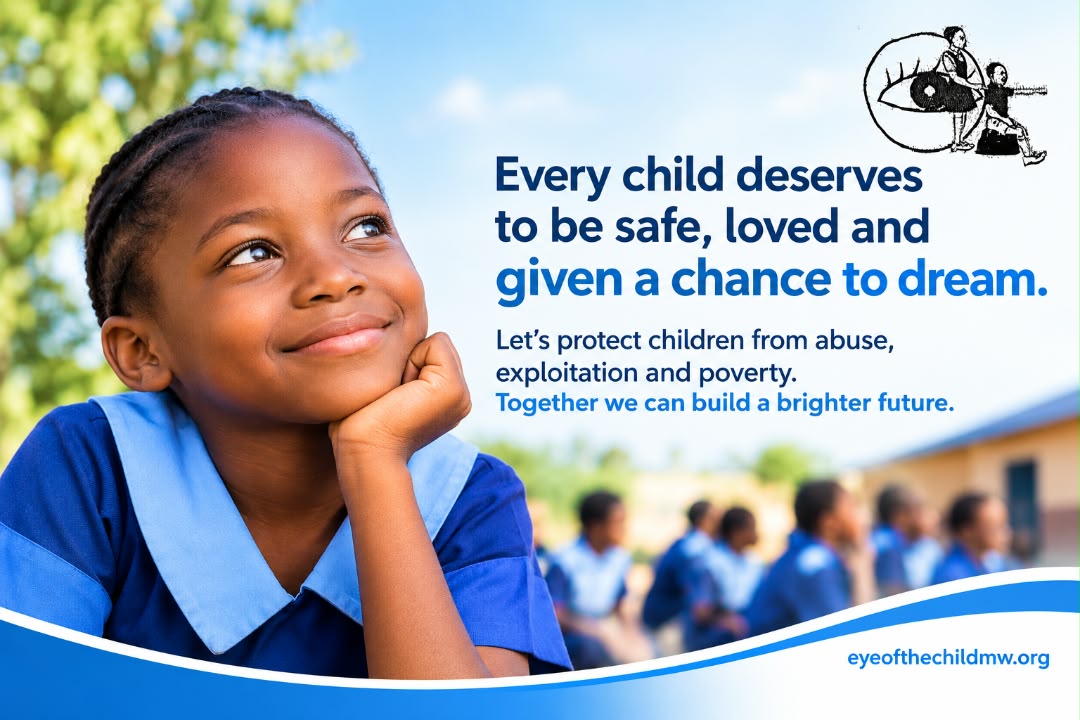
Every child deserves to grow up in a safe and loving environment, go to school, play with friends and dream about a better future. But for many children in Malawi, childhood is not always a happy experience. Poverty, abuse, child trafficking and commercial sexual exploitation continue to put vulnerable children at risk.
 
Behind the smiles of some children are painful stories that many people never hear. Some go to bed hungry, others live on the streets, while some are forced into dangerous situations in search of food, money or a better life. These children need more than sympathy. They need protection, care and opportunities to build a better future.
 
When Poverty Puts Children at Risk:
 
Poverty is one of the challenges that makes children vulnerable to exploitation. When families cannot afford food, school fees and other basic needs, children may become easy targets for people who want to take advantage of them.
 
Some children are promised money, jobs or a better life, only to find themselves trapped in abuse and exploitation. Others end up in unsafe places, including bars and nightclubs, where they may face commercial sexual exploitation.
 
No child should have to suffer abuse because their family is poor. Every child deserves protection, regardless of where they come from or their family’s financial situation.
 
Commercial sexual exploitation can leave children with deep emotional wounds, interrupt their education and destroy their confidence. Protecting these children requires society to take action before more lives are affected.
 
Rescue Is Only the Beginning:
 
Removing a child from an unsafe environment is an important step, but the journey to recovery does not end there. Children who have experienced exploitation need counselling, education, life skills and people who can support them as they rebuild their lives.
 
At safe houses, rescued girls can learn skills such as tailoring, baking, hairdressing and gardening. These activities help them discover their abilities, gain confidence and begin to dream again.
 
A girl who once struggled to speak openly may gradually find her voice. A child who had lost hope may begin to imagine becoming a teacher, journalist or businesswoman.
 
These changes show why rehabilitation and long-term support are so important. Children need opportunities to return to school, develop skills and prepare for a safer future.
 
However, organisations cannot do this work alone. Families, communities, government, donors and other partners must work together to ensure that children receive the support they need.
 
How Can We Make a Difference?
 
Protecting children is everyone's responsibility. Parents and caregivers must create safe environments where children can speak about their problems without fear. Communities should report suspected abuse and help identify children who may be at risk.
 
Government institutions must strengthen child protection services and ensure that those who exploit children are held accountable. Organisations working with children also need resources to provide safe shelter, counselling, education and rehabilitation.
 
Donors and development partners have an important role to play. Their support can help vulnerable children access education, learn useful skills and rebuild their lives. Supporting families to improve their livelihoods can also reduce some of the pressures that expose children to exploitation.
 
Every contribution matters when it helps protect a child. Financial support, learning materials, skills training and partnerships can all make a difference.
 
Together, We Can Protect Childhood:
 
At Eye of the Child, protecting children's rights means working towards a future where every child is safe, valued and given an opportunity to succeed.
 
The challenges facing children in Malawi require more than words. They require action, commitment and cooperation. We cannot ignore the suffering of children simply because their stories happen far from our homes.
 
Behind every child is a dream worth protecting. Behind every rescued child is a future that deserves another chance.
 
To our donors, partners, businesses and the public, join us in protecting children from abuse and commercial sexual exploitation. Your support can help turn pain into hope and give vulnerable children a chance to rebuild their lives.
 
A child's future should never be destroyed by poverty, abuse or exploitation. Together, we can create a Malawi where every child has the opportunity to grow, learn and dream without fear.
 
Protect a child! Restore hope! Change a future!
OUR MOTHER'S DAY STORY: A DAY FULL OF LOVE

OUR MOTHER'S DAY STORY: A DAY FULL OF LOVE

Mother's Day for us at Eye of the Child was not just one event, it was a whole day of love, from morning to afternoon
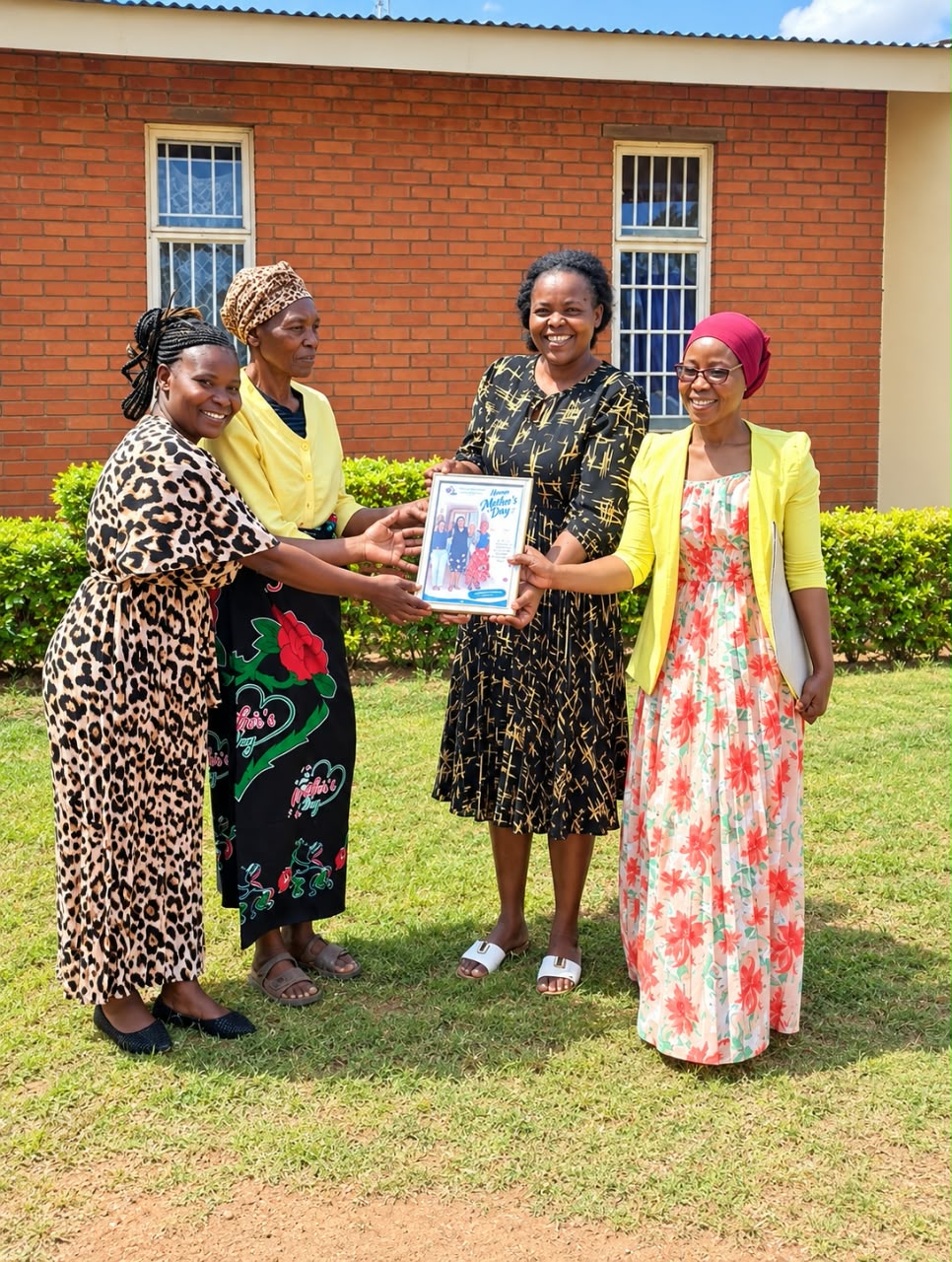
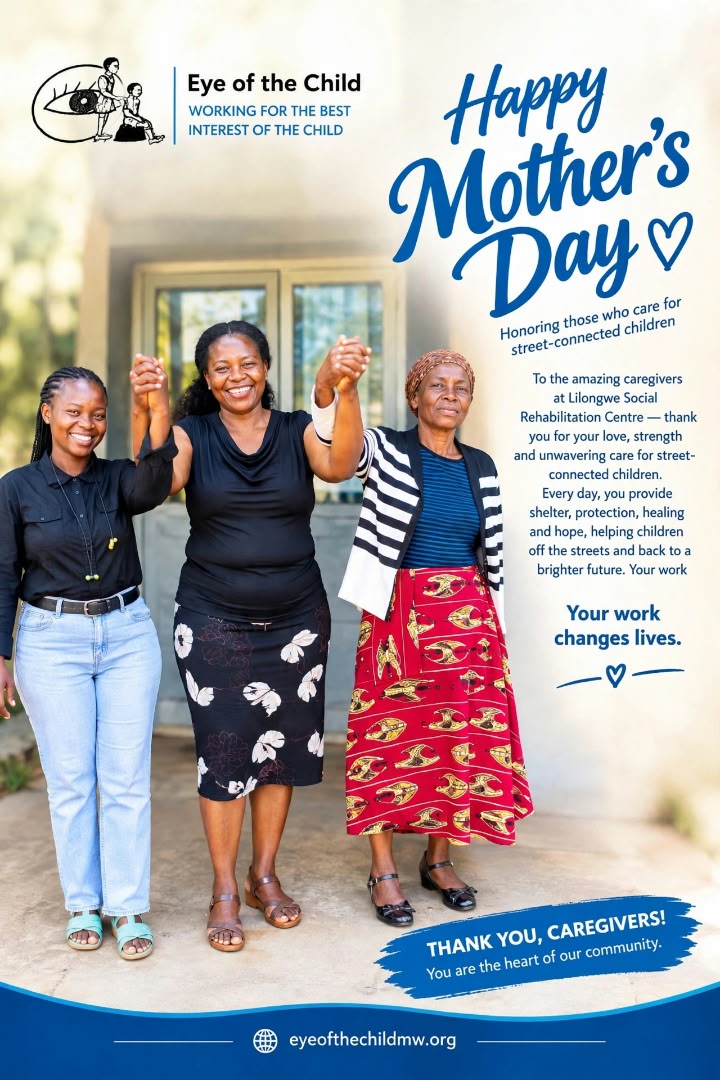
We started the day at Lilongwe Social Rehabilitation Centre to celebrate the special mothers - the caregivers.
These are women who mother children who have no one. They give them love, food, shelter, and hope every single day.
We went to say thank you for the great job.
With support from our Eye of the Child staff , we handed over a beautiful Mother's Day picture frame and mother's day gifts.
You should have seen their faces! So much joy and grateful hearts. They truly felt seen and appreciated.
We ended the day where our heart is - at our shelter with our girls.
We had a Mother's Day party! Good food, music, laughter, and a lot of dancing.
Our girls ate, they laughed, they danced freely. It was not just about food — it was about belonging. About reminding every girl that she is loved, she is family, and she is worthy.
From giving love in the morning to celebrating love in the afternoon — that was our Mother's Day.
 
Happy Mother's Day from the Eye of the Child family!
BEYOND MOTHERHOOD: THE WOMEN WHO GIVE CHILDREN HOPE, HEALING AND A SECOND CHANCE

BEYOND MOTHERHOOD: THE WOMEN WHO GIVE CHILDREN HOPE, HEALING AND A SECOND CHANCE

This Mother’s Day, Eye of the Child celebrates the women whose love reaches beyond their own families to protect children, restore hope and help build a brighter future.
 
There is a kind of love that cannot be measured by the number of children a woman gives birth to. It is measured by the tears she wipes away, the pain she helps heal, the little hands she holds through difficult moments, and the hope she gives to a child who has almost stopped believing in tomorrow.
 
Sometimes, motherhood is found in a mother waiting for her daughter to come home. Sometimes, it is found in a woman who opens her heart to a child who is not her own. And sometimes, it is found in those who choose to stand between a child and a world that has failed to protect them.
 
This Mother’s Day, Eye of the Child celebrates that extraordinary kind of love.
 
Before Mother’s Day, we shared a story of waiting, longing and hope. It was the story of a mother looking forward to the day her daughter would return home.
 
For a mother separated from her child, every passing day can carry a thousand questions. Is my child safe? Is she healing? Will she come home? Will she smile again the way she used to?
 
These are questions that no mother should have to carry alone.
 
For children who have experienced exploitation, abuse or vulnerability, returning home is more than a physical journey. It can be the beginning of a difficult but beautiful process of healing, rebuilding trust and learning to dream again.
 
Behind every child who begins to smile again is often someone who refused to give up. Someone who listened. Someone who protected. Someone who believed that the child’s past should never determine the rest of their life.
 
And behind every hopeful reunion is a reminder that children need more than rescue. They need love, patience, understanding and a family or community ready to stand beside them.
 
That is where the true meaning of motherhood becomes even more powerful.
 
Not every woman who changes a child’s life is that child’s biological mother. Some become a source of comfort when fear takes over. Some help children rediscover their confidence after painful experiences. Others work tirelessly to ensure that children are protected, heard and given opportunities to build better futures.
 
Their work may not always be visible. Their sacrifices may go unrecognised. And the children whose lives they touch may never fully understand, at least not yet, how much those acts of kindness mean.
 
It lives in a girl who begins to speak confidently after months of silence. It lives in a child who dares to return to school and dream of becoming a teacher, a journalist or a doctor. It lives in a young person who begins to believe that life can offer something better than the pain they have experienced.
 
These are the victories that make every effort worthwhile.
 
At Eye of the Child, the commitment to protecting children is rooted in a simple but powerful truth: every child deserves safety, dignity, love and the opportunity to grow into the person they were meant to become.
 
And those who dedicate their lives to that mission deserve to be celebrated.
 
This Mother’s Day, we honour Laura Schreiber, Global Patron of Eye of the Child, whose Mother’s Day tribute recognises her commitment and support for children and the future of Malawi.
 
Her message is a reminder that the responsibility to protect children does not end at the borders of a country, within the walls of a home, or with the people directly related to a child.
 
Through the work and support of people who care deeply about children, the call for a safer world becomes more than a message. It becomes an invitation to participate in something greater than ourselves.
 
Laura’s tribute celebrates the difference that compassion, dedication and continued support can make in the lives of children.
 
 
We also celebrate Priscilla Rosario Garner, whose tribute carries a message that speaks to the heart of every person who believes in protecting the vulnerable.
 
It is a love that crosses distance, reaches beyond differences and reminds us that compassion can touch lives far beyond our immediate circles.
 
Her tribute recognises the courage, compassion and unwavering heart associated with standing for truth and protecting the vulnerable.
 
In a world where children can suffer in silence, women who speak up for what is right remind us that silence is not the only response to suffering. We can choose to care. We can choose to act. We can choose to stand with children whose voices are too often ignored.
 
Priscilla’s Mother’s Day message is a celebration of that spirit: the determination to protect, the courage to stand for what is right, and the belief that love must be expressed through action.
 
Because sometimes, being a light in a child’s life means standing up when it would be easier to look away.
 
And sometimes, the most beautiful gift we can give a child is the assurance that somebody cares enough to stand up for them.
 
Every child deserves a chance to grow up without exploitation, to receive an education without fear, and to dream without feeling that poverty or a painful past has already decided their future.
 
When women use their voices, influence and compassion to support children, they help strengthen a movement that reaches far beyond one individual.
 
They help remind the world that children are not forgotten, that their futures matter, and that their protection is a responsibility we must share.
 
As we celebrate the women who inspire us, there is another group we must remember: the children who are still waiting.
 
Some are waiting for a safe place to call home. Some are waiting to be reunited with their families. Some are waiting for someone to believe their stories. Others are waiting for the opportunity to return to school, learn a skill, or discover that their dreams are still possible.
 
And somewhere, there may be a mother waiting for the day she can hold her child again without fear.
 
Their stories remind us that Mother’s Day is not only about flowers, gifts and beautiful messages. It is also about the kind of world we are creating for the next generation.
 
Can a child feel safe enough to speak? Can a girl who has experienced exploitation rebuild her life without being judged? Can a struggling mother find the support she needs to protect her children? Can communities recognise the warning signs of abuse and exploitation before another child is harmed?
 
These are questions that deserve more than a single day of attention.
  • They demand compassion, action and a collective commitment to protecting every child.
  • At Eye of the Child, we believe that when a child is protected, a future is protected. When a child is given another chance, hope is restored. And when a mother is supported, the entire family can become stronger.
  • One day, a child who was once afraid may look back and remember the person who helped them find their voice.
  • A girl who once believed her dreams were lost may become a woman who inspires others.
  • A mother who spent months waiting may finally hold her child again, grateful for the chance to begin a new chapter.
  • And the women who helped make those moments possible may never fully see the extent of the difference they made.
  • But their legacy will live on in every child who finds the courage to hope again.
To  Laura Schreiber, Priscilla Rosario Garner
and every woman who stands with children in moments of vulnerability, your compassion reminds us that motherhood can reach beyond biology. It can be expressed through protection, advocacy, kindness and the courage to keep showing up when children need us most.
 
This Mother’s Day, we celebrate you. We celebrate the mothers who wait, the women who protect, the caregivers who nurture, and the champions who refuse to let a child’s story end in pain.
 
May every child who is waiting find a safe home. May every mother who is longing find hope. And may every woman who has dedicated her heart to protecting children know that her work matters.
 
To every woman who has helped a child feel safe, loved and worthy of a future: thank you. You may not have given birth to every child whose life you touch, but your love may be the reason that child learns to believe in tomorrow.
 
Happy Mother’s Day from Eye of the Child

THREE SPECIAL MOTHERS: COUNTLESS REASONS TO SAY THANK YOU.

THREE SPECIAL MOTHERS: COUNTLESS REASONS TO SAY THANK YOU.

By Asiyatu James
 
Behind every child who begins to believe in a better future, there is often someone who refused to give up on them.
 
Someone who cared when things were difficult. Someone who offered support when hope seemed far away. Someone who believed that every child, regardless of their circumstances, deserves another chance at life.
 
Sometimes, these people are called mothers. Not only because they gave birth, but because they have chosen to nurture, protect, encourage and stand up for children who need them most.
 
This Year's Mother’s Day, 15 October, Eye of the Child will celebrate three special mothers whose love, commitment and contribution have made a meaningful difference to our organisation and the lives of children we support.
 
Their stories are different, but their impact shares one beautiful purpose which is giving children a reason to hope again.
 
Among the children touched by their kindness are girls who have survived commercial sexual exploitation. These are girls whose lives have not always been easy, but who are now receiving support, learning new skills and beginning to imagine a future beyond the painful experiences they have endured.
 
Every skill learned is a step towards independence. Every word of encouragement helps rebuild confidence. Every act of support brings a girl closer to a future in which she can dream, make choices and build a life of her own.
 
And behind some of these changes are people whose contributions deserve to be celebrated.
 
Could one of these three mothers be someone you know? Could it be someone who has quietly supported our work, opened a door of opportunity, given generously or stood beside us when children needed help?
 
Perhaps it is a woman whose contribution has never received the recognition it deserves. Perhaps it is someone who believes that protecting a child is not simply the responsibility of an organisation, but a responsibility we all share.
 
Or perhaps, as you read this, you are remembering your own contribution to the lives of vulnerable children.
 
At Eye of the Child, we know that meaningful change is rarely achieved alone. It takes people who care enough to act, partners who believe in our mission, and supporters who understand that investing in a child's future is an investment in the future of our nation.
 
That is why this Mother’s Day is more than a celebration. It is an opportunity to recognise the women whose actions remind us that compassion can change lives and that no contribution made for the well-being of a child is too small to matter.
 
On 15 October 2026, we will introduce you to our three special mothers and celebrate the difference they have made.
 
We will share their stories, honour their contributions and reflect on what their commitment means for the children whose lives they have helped touch.
 
Who are these three mothers? What have they done to earn this special recognition? And what can their stories teach us about the power of caring for a child?
 
Their identities will be revealed on Mother’s Day, 15 October!
 
Until then, we invite you to join us in celebrating every mother, every woman and every compassionate supporter who has helped a child find hope, dignity and a reason to look forward to tomorrow.
 
Because sometimes, the people who change a child's life do not ask to be celebrated. They simply show up, give what they can and keep believing.
 
This Mother’s Day, Eye of the Child will make sure their kindness does not go unnoticed.
 
Eye of the Child! Working for the Best Interest of the Child.
WHEN PROTECTION MEETS EDUCATION: From Rescue to Classroom

WHEN PROTECTION MEETS EDUCATION: From Rescue to Classroom

By: Asiyatu James
 
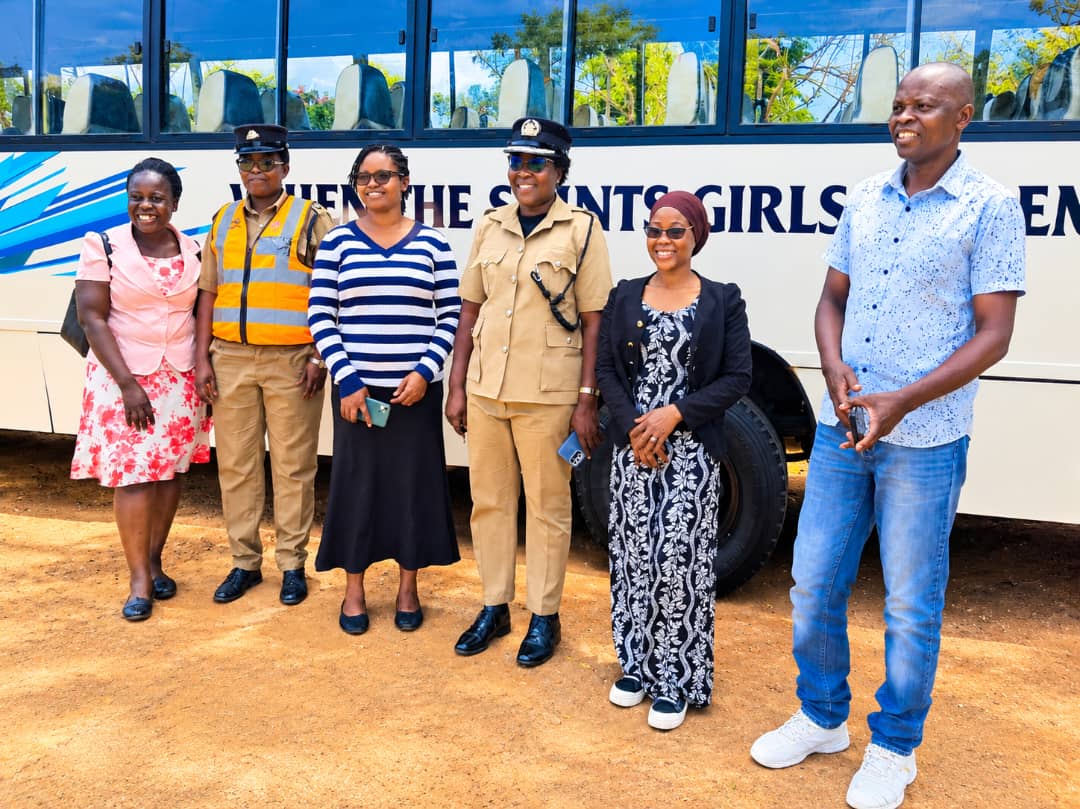
On Tuesday 6th October 2026, our team at Eye of the Child, together with our friends from Mponela Police Station, visited When The Saints Safe Home in Mponela, Dowa.
 
It was not just a courtesy call. It was a visit of hope.
 
At Eye of the Child, our job is clear: We rescue and provide emergency shelter. We rescue girls escaping child marriage, child labour, child abuse, sexual exploitation, trafficking and life on the street. We take them in, we counsel them, we heal them and we trace their families.
 
But after a girl is healed, she faces a difficult question: Where will she safely continue her education?
 
She cannot go back to her old school. It is not safe, and the stigma is too heavy. That is the gap we are determined to close.
 
A Safe Haven Full of Hope:
We were warmly welcomed by the team at When The Saints. What we saw touched our hearts - a safe, clean and loving environment where vulnerable girls are given a second chance through education and care.
 
We also saw their strong collaboration with Mponela Police Victim Support Unit, who rescue and refer girls in danger.
 
Our Dream:
During our meeting, we shared a dream close to our hearts: Can our rescued and rehabilitated girls access further education at When The Saints School as part of their reintegration?
 
We do not see When The Saints as just another shelter. We see them as a strong EDUCATION FACILITY that can partner with Eye of the Child on the most important stage of reintegration through education.
 
They listened and welcomed the idea and they gave us the next step. They have asked us to write a formal letter requesting partnership, identifying the key areas we want to collaborate on. Once they receive it, they will present it to their management for approval.
 
This is where we are now. We have not yet been given the opportunity, but we are taking the first step in faith. We are writing that letter.
 
In that letter we will commit to what we do best: We will continue to rescue. We will share each girl's story and vulnerability. And we will continue to walk with her by providing school fees, uniforms, learning materials, counseling, medical and family support.
 
What we are asking When The Saints to do is to come in as our Education Partner - to provide a safe boarding and learning environment where our girls can learn without fear.
 
Our vision is simple and powerful: Mponela Police for Protection. Eye of the Child for Rescue & Shelter. When The Saints for Education & Reintegration.
 
Together, we can close the gap between rescue and prevention in Dowa.
 
We sincerely thank the Officer In-Charge of Mponela Police and the Director and staff of When The Saints for their open doors and open hearts.
 
To our friends and donors - your support keeps our rescue shelter open. A rescue today is a girl in a classroom tomorrow. We will keep you updated once we receive feedback.
 
If you would like to support a rescued girl to stay in safe school, please inbox us or donate via: http://eyeofthechildmw.org
PREVENTING COMMERCIAL SEXUAL EXPLOITATION: PROTECTING CHILDREN BEFORE IT HAPPENS

PREVENTING COMMERCIAL SEXUAL EXPLOITATION: PROTECTING CHILDREN BEFORE IT HAPPENS

By Asiyatu James
 
A child should never have to choose between going to school and having something to eat. But for some children in Malawi, poverty can make that choice painfully real.
 
When a family struggles to provide food, school materials, transport or basic needs, a child can become vulnerable to people who offer what appears to be an easy solution.
 
What may look like an opportunity can sometimes become a pathway to exploitation.
 
*It starts with vulnerability*
 
Commercial sexual exploitation of children does not always begin with a child being taken from their home. Sometimes, it begins much earlier—with hunger, poverty, school dropout, family difficulties or a lack of safe opportunities.
 
A child who is struggling may be approached by someone who understands their vulnerability. And once exploitation begins, getting out can be difficult.
 
This is why protecting children cannot only mean rescuing them after harm has occurred. We must also reach them before they are exploited.
 
*Prevention can change a child's story*
 
Imagine a child who is at risk of dropping out of school because her family cannot afford basic school requirements. Imagine another child whose family has no reliable source of income.
 
Imagine a young girl being offered money by an adult who knows exactly what her family is going through.
 
What if, before that offer reaches her, there is someone in the community who notices?
 
What if her family receives support? What if she has access to education, life skills and safe opportunities?
 
What if a child protection committee has the resources to identify and respond to risks early? That is where investment can make a difference.
 
*A small intervention can protect a future*
 
At Eye of the Child, protecting children means looking beyond the immediate crisis. It means strengthening families and communities.
 
It means creating awareness so parents can recognise risks.
 
It means equipping children with knowledge about exploitation and unsafe offers.
 
It means supporting children to remain in school and helping vulnerable families find safer ways to cope.
 
It means making sure communities know where to report suspected exploitation.
 
These interventions may appear small. But for a vulnerable child, they can mean the difference between safety and exploitation.
 
*Donors can help us reach children before it is too late*
 
There are many children whose stories will never make the news because someone intervened early.
 
A child remains in school. A parent recognises a dangerous job offer. A community reports a suspected case. A child learns that an adult asking for secrecy is not offering a safe opportunity. These are quiet victories.
 
They may not produce dramatic headlines, but they protect futures. With the right resources, Eye of the Child can do more to reach vulnerable children, strengthen families, train communities, raise awareness and prevent commercial sexual exploitation before it happens.
 
*The child we protect today is the adult who leads tomorrow*
 
Every child has a future that is bigger than their present circumstances.
 
A child we protect today may become a teacher, journalist, nurse, business owner, farmer, lawyer or community leader tomorrow. But that future requires protection today.
 
*We should not wait until a child has been exploited before we decide that their life matters.*
 
We can act earlier, we can strengthen the family, we can empower the community, we can keep children in school.
 
We can educate children about the dangers around them. And we can prevent exploitation before it becomes a child's reality.
 
Eye of the Child is calling on partners, donors, businesses and individuals who believe that every child deserves a safe future to invest in prevention.
 
Your support can help us:
  • Reach vulnerable children and families with child-protection information.
  • Support community awareness on commercial sexual exploitation.
  • Strengthen child protection structures in communities.
  • Help vulnerable children remain connected to education.
  • Equip children with life skills and knowledge to recognise risky situations.
  • Support early identification and referral of children at risk.
  • Strengthen families so poverty does not become a pathway to exploitation.
  • Because the best rescue is the one we never have to make.
SHE WENT LOOKING FOR FOOD: SHE FOUND HERSELF AT RISK

SHE WENT LOOKING FOR FOOD: SHE FOUND HERSELF AT RISK

By Asiyatu James, Eye of the Child
 
A child’s poverty should never become someone else’s opportunity to exploit them.
 
At the end of the day, every child deserves to think about school, friends, play and dreams. But for some children living in difficult circumstances, the biggest question is much simpler: “Where will my next meal come from?”
 
When families struggle to provide food, school fees, clothing and other basic needs, children can become more vulnerable to people who take advantage of their situation with a promise of money, a meal, new clothes, and a job.
 
What looks like help can sometimes become a pathway into exploitation.
 
One girl staying at Eye of the Child shelter knows this reality. She comes from a family headed by a single mother who spends each day moving from place to place trying to find enough money to provide basic needs for her children.
 
Some days, the struggle continues from morning until evening. The girl would return from school hungry, only to find that there was no food at home.
 
Eventually, hunger pushed her to look for her own way of getting money. She began moving around bars in search of money to buy food.
 
What started as a search for something as basic as a meal placed her in an environment where she became vulnerable to exploitation
 
What happened to this child is a reminder that vulnerability can be noticed by the wrong people.
 
It is important to be clear: poverty does not cause or justify commercial sexual exploitation of children. Children do not choose to be exploited because they are poor.
 
A child accepting money, food or a gift does not give an adult the right to sexually exploit that child. The responsibility lies with those who exploit children and with the adults and systems that must protect them.
 
Protecting children requires more than rescuing them after exploitation has happened. Parents and guardians can pay attention to where children spend their time and who they interact with.
 
Teachers can notice when a child suddenly stops attending school. Communities can speak up when children are being taken into unsafe environments.
 
Business owners must ensure their premises are not being used to exploit children and when exploitation is suspected, silence should never be the response.
 
A child who is hungry needs food not exploitation. A child who needs school fees needs support not abuse.
 
A child who needs opportunity needs someone to open a door not someone to take advantage of their vulnerability.
 
At Eye of the Child, we believe every child deserves protection, dignity and the opportunity to grow without exploitation.
 
We call on parents, communities, businesses and everyone who cares about children to notice, speak up and act.
 
Protect a child! Speak up against exploitation.